
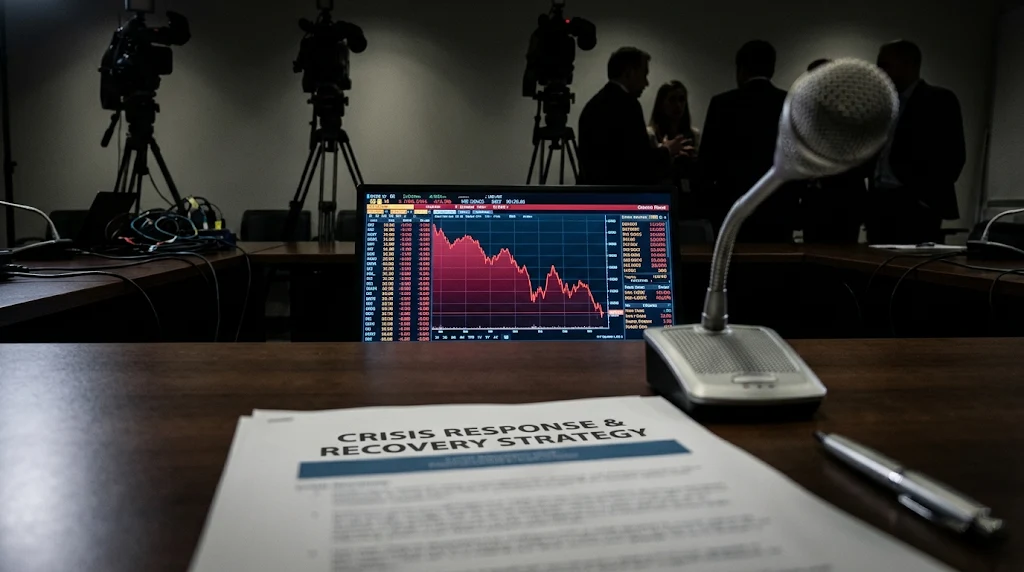
In the modern corporate ecosystem of 2026, the grace period between a public relations disaster and financial fallout has effectively disappeared. Driven by real-time social media amplification and hypersensitive algorithmic trading, corporate reputational damage is immediately quantified in market capitalization. For CEOs and corporate boards, crisis communications is no longer just a media strategy – it is a critical fiduciary duty designed to stop billions in shareholder value from evaporating within hours.
Algorithmic Trading and the Speed of Reputational Damage

The speed at which a PR crisis impacts stock valuation has accelerated dramatically. A decade ago, markets often waited for quarterly earnings reports to assess the actual financial damage of a scandal. Today, algorithmic sentiment trading models scan social media platforms, news wires, and press releases in real-time, executing aggressive sell-offs the moment negative keyword thresholds are breached.
This automated reaction creates a “flash crash” effect for targeted equities, forcing corporate PR teams to issue holding statements and remediation plans within minutes, rather than days, simply to stabilize the algorithm’s sentiment analysis parameters.
Case Studies: Stock Recovery Timelines in 2026
While the initial drop is almost always immediate, the recovery timeline depends entirely on the nature of the crisis and the transparency of the corporate response. Analysis of recent major US corporate crises reveals distinct recovery patterns based on whether the issue was operational, ethical, or regulatory.
| Crisis Type | Average Initial Stock Drop (48h) | Primary Market Concern | Average Recovery Timeline |
| Cybersecurity / Data Breach | -8% to -14% | Class-action lawsuits, customer churn, and immediate SEC disclosure penalties. | 3 to 6 months |
| Executive Misconduct / Ethics | -5% to -11% | Leadership vacuum, toxic corporate culture, and activist investor intervention. | 6 to 12 months (often requiring CEO replacement) |
| Operational / Supply Chain Failure | -12% to -18% | Direct impact on quarterly revenue, long-term vendor trust, and logistics costs. | 12 to 18 months |
| “AI Washing” / Product Fraud | -15% to -25% | Loss of investor confidence in core tech capabilities and severe federal regulatory action. | 18+ months (highly volatile) |
The Intersection of PR Risk and Regulatory Compliance

Today, a public relations crisis is rarely isolated to the court of public opinion; it is almost immediately followed by regulatory scrutiny. When a tech company faces backlash over algorithmic bias or data mismanagement, it instantly triggers federal investigations. Navigating this treacherous landscape is as critical for corporate survival as managing emerging tech compliance, which we detailed extensively in our 2026 US AI Regulatory Tracker.
Ultimately, the companies that bounce back fastest from PR disasters are those that have pre-established “dark sites” (hidden crisis communication webpages ready to launch), transparent reporting structures, and a proactive relationship with both retail investors and institutional shareholders.
Frequently Asked Questions (FAQ)
How much does a major PR crisis drop a company’s stock on average?
While highly variable, a tier-one corporate crisis typically erodes between 8% and 15% of a company’s market capitalization within the first 48 hours, largely driven by automated trading sell-offs.
What is “algorithmic sentiment trading”?
It is a form of high-frequency trading where computer algorithms analyze the emotional tone (positive, negative, neutral) of news articles and social media posts in real-time, executing trades based on the perceived reputational shift of a company.
Do stock prices usually recover fully from reputational damage?
Yes, historically over 75% of large-cap public companies recover their pre-crisis stock valuation within 12 months, provided the underlying business fundamentals remain strong and executive leadership takes swift, transparent corrective action.